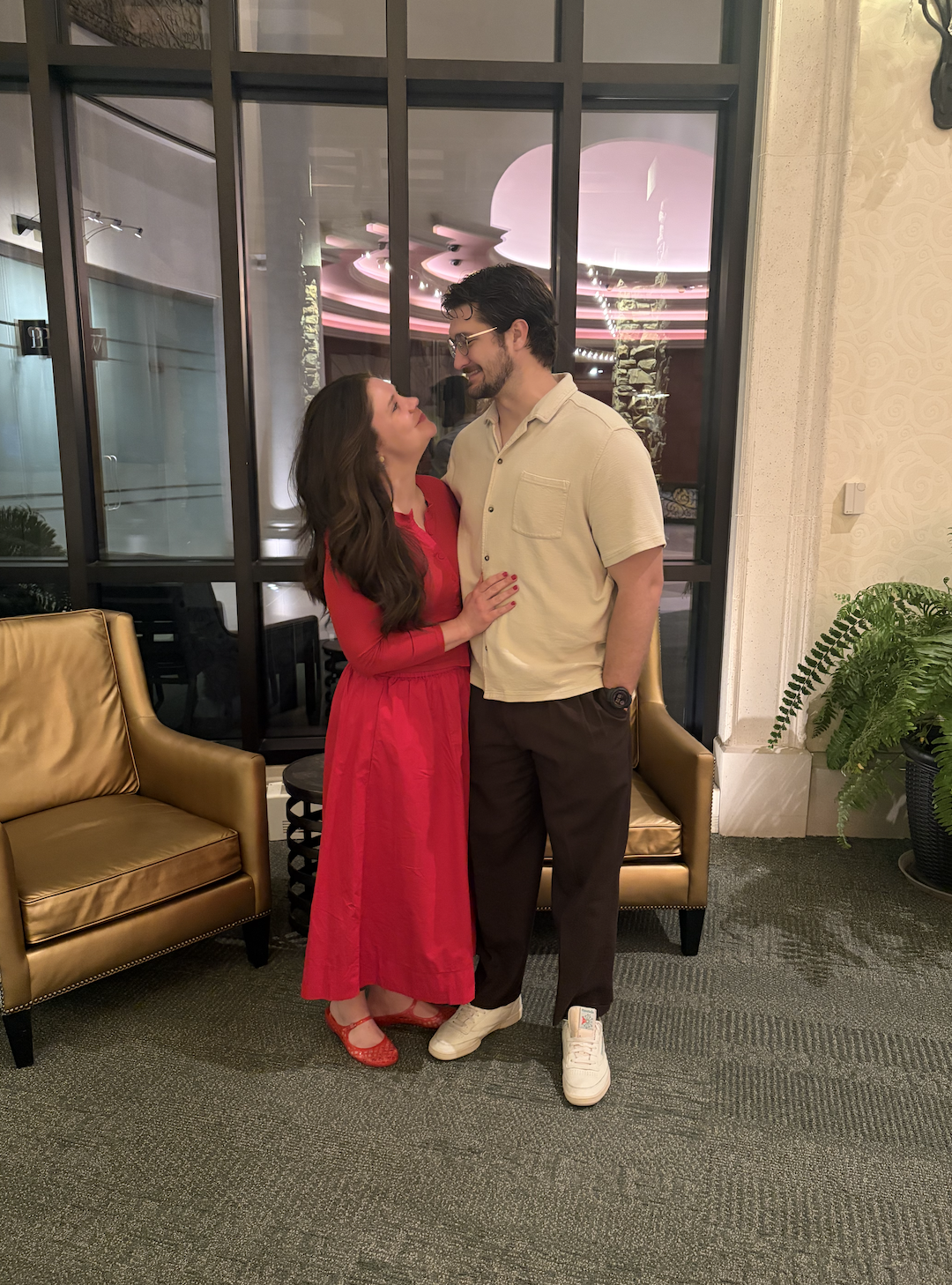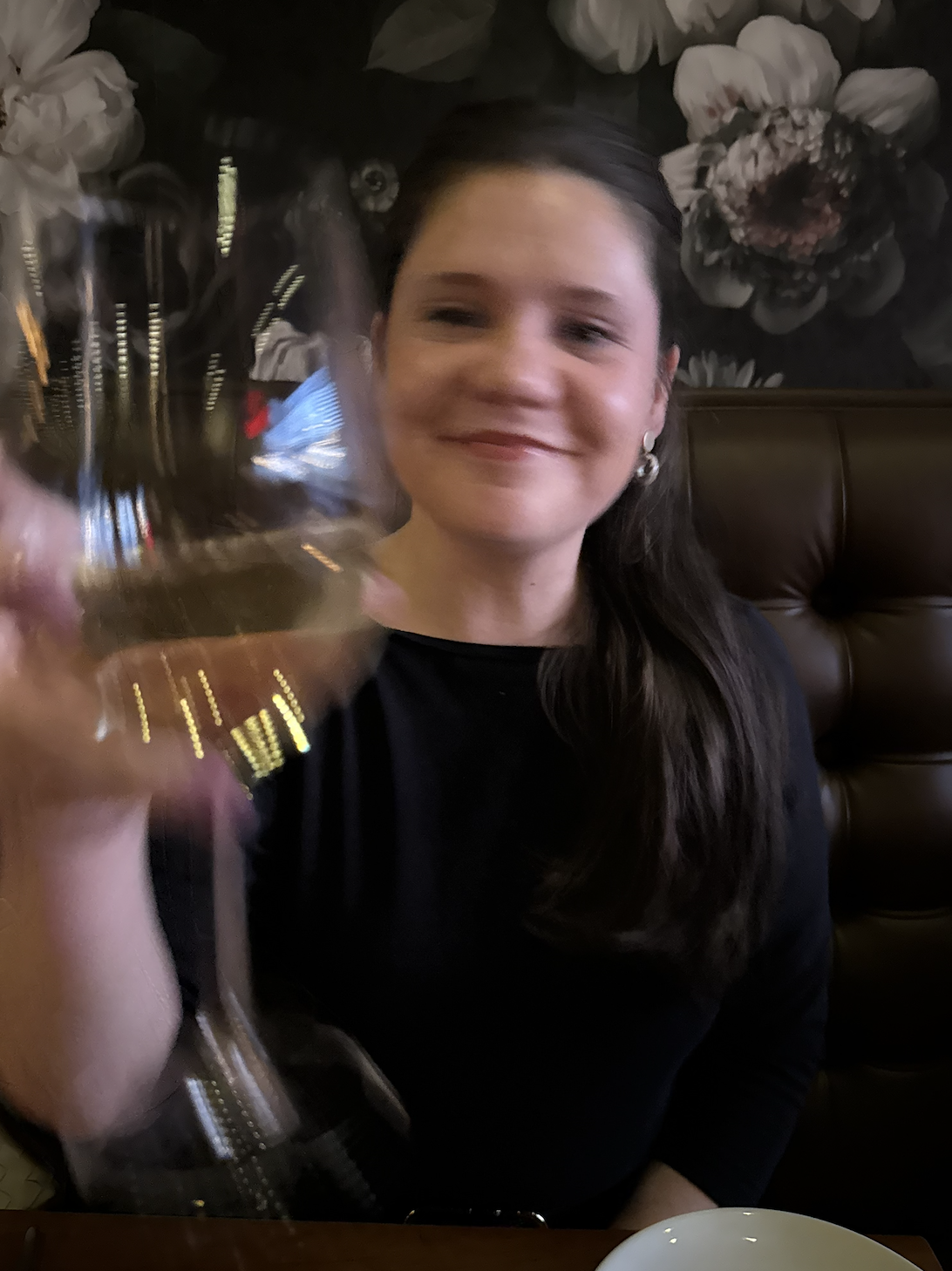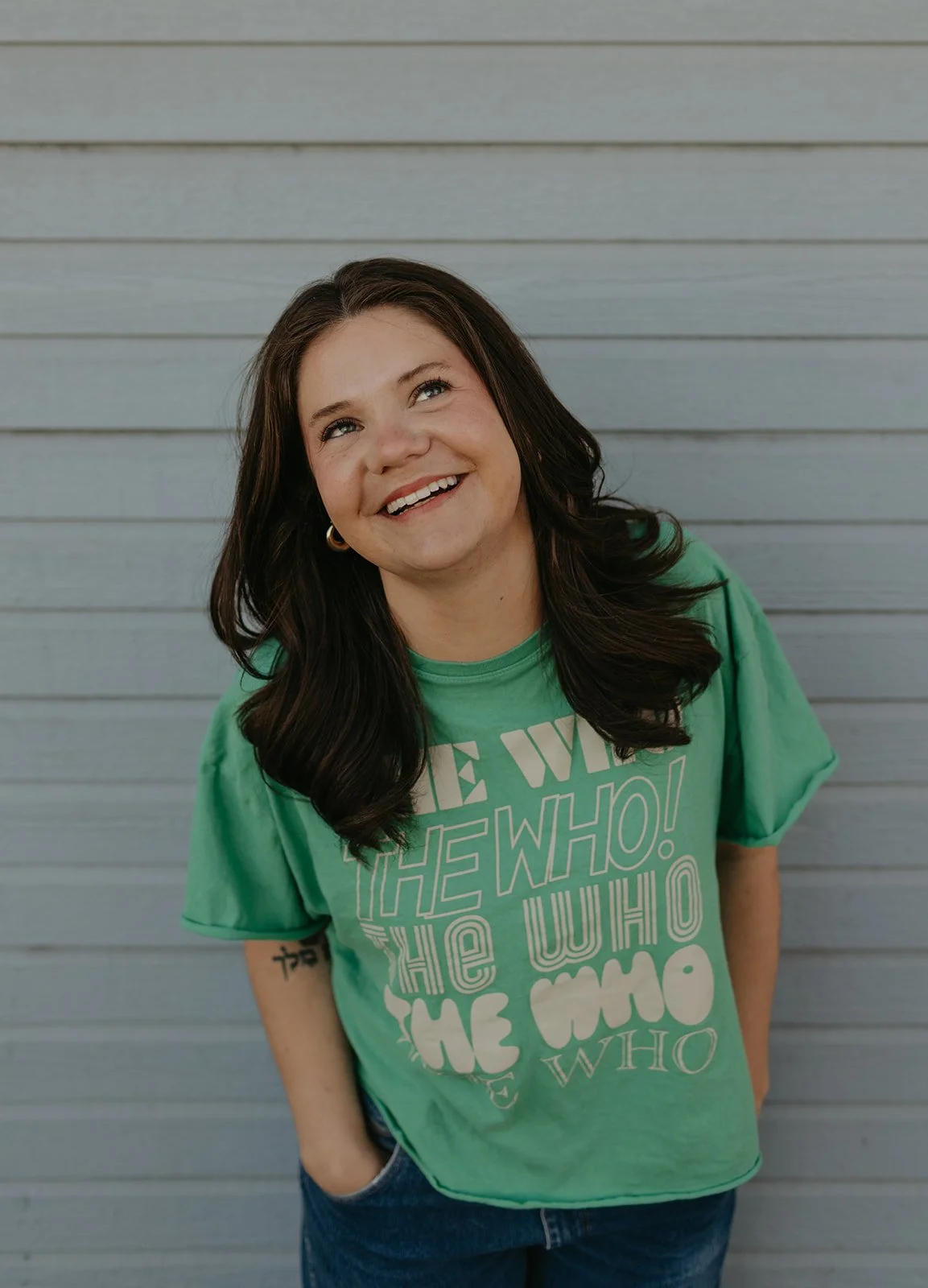
Hi, I'm Mackenzie. Grant strategist, public health nerd, and the person in your corner when the funding feels out of reach.
My grant writing story started at a backpack program.
During my Master of Public Health internship, I was placed with a small, community-rooted organization doing quiet, unglamorous, important work: making sure kids had food in their backpacks to take home on Fridays. It was there that I met my first grants mentor, and under her guidance, I wrote my first successful grant applications.
I will never forget that first grant win feeling: knowing that children were eating because of the work I had done!
I was also hooked on the strategy of it all. The funder research. The relationship building. The process of taking an organization's story and translating it into something a funder couldn't say no to.
I had worked in nonprofits before, as an employee, as a volunteer, in all kinds of roles, and nothing had ever felt this mentally engaging or purposeful.
I knew I had found my thing.
So how did we get here?
I dove in headfirst: joining the Global Grant Writers Collective, earning my certification as a Funding Strategist & Grant Writer, completing my Master of Public Health, and earning my Certified in Public Health credential.
Then I got to work.
In my first years in business, I partnered with organizations across 4 states, helping 7 nonprofits secure over $15 million in funding. My work has spanned the full landscape of public health: food insecurity, rural healthcare delivery, electronic medical records, cancer patient education, holistic wellness programs such as dance and gymnastics, and much more.
In 2025 alone, Carlisle Funding Co. secured over $9 million for our clients, including a federal grant won on a two-week turnaround.
When I am not writing grants.
You can find me somewhere in Missouri with a book in my hand, a crochet project half-finished on the couch, or out on a trail with my husband and our dog Finn.
I am a Texas girl, recently transplanted to Missouri, but bringing that southern sass everywhere I go.
I read almost exclusively nonfiction, but I will drop everything for anything written by R.F. Kuang. No apologies.
I can’t wait to meet you!
“During the past year, I have been extremely impressed with Mackenzie’s enthusiasm, professionalism, suggestions, and her proficient writing skills... I believe Mackenzie will be a great asset to your nonprofit because of what she brings to your agency, her knowledge gained through her graduate studies, and her experience working with nonprofit agencies.”
Grant Writer & Mentor
My writing.
There was a season in my business when I juggled up to 5 clients and their entire annual grant calendars at once. All on my own. No team. No assistant. Just me, a laptop, and a very long list of deadlines.
And here is the thing: the writing was the easiest part. Juggling deadlines is where things got difficult.
As an Enneagram 1 and classic eldest daughter, I knew I would work best with a system. I googled, researched, and talked to other grant writers, and I couldn’t find a system that truly worked for me. So I built one!
I call it Mackenzie's Monthlies: the M&M Method, if we are being friendly. It did not come from a textbook. It grew organically from a couple of really good grant-writing books, a lot of trial and error, and the plain necessity of managing competing calendars without losing my mind.
Here's something people don't expect to hear from a grant writer: writing is only about 30% of the job.
The other 70% is split between organization and strategy (about 30%) and relationships (about 40%). The writing matters, but it's the smallest slice.
The grants world rewards the person who knows what's due, who to call, and where the file lives.
I firmly believe organization and project management are the only ways to stay ahead in this field.
So if you're a potential client wondering what it's like to work with me, or a fellow grant writer who loves a good system, here's a peek behind the curtain at the five systems that keep my business running.
I'm a grant writer. I write funding proposals for public health-centric organizations, and most days, that means translating community need into dollars and cents for people who've never set foot in the neighborhoods I'm writing about.
But before I was a grant writer, I was an MPH student.
I actually found grant writing almost by accident during my Master's in Public Health: a program needed funding, someone needed to write the case for it, and I raised my hand.
I accidentally fell in love with the craft of it: the strategy, the storytelling, the puzzle of matching a program's need to a funder's priorities. Grant writing and fundraising became my career.
But public health? That's still my first love. It's the lens I can't turn off. It's in the food pantry client list, the school vaccination clinic, the community garden proposal, the housing nonprofit's outcomes report. It touches everything I do.
AI. Is there a more talked-about topic in 2026?
Considering that most nonprofits are decades behind in their processes, procedures, and technology, I was genuinely surprised to see so many of my nonprofit friends adopt ChatGPT so quickly.
But considering what AI promised the world, it makes sense.
AI promised us less work and more output, and nonprofits are desperate for exactly that. Many nonprofit teams are overworked, underpaid, behind on workflows and reporting, and have almost no time left over for strategic thinking. AI walked in and said, "I can fix all of that."
And it can fix a lot of things!
But AI cannot be your grant writer.
If you have been on social media lately, you have probably seen something about health care cuts. Maybe a post about Medicaid. Maybe a headline about hospitals closing. Maybe a friend sharing something alarming and then scrolling past it.
But here is what I keep noticing: most people are catching pieces of the story. A clip here. A headline there. And because the news cycle moves so fast and there is so much happening at once, it is easy to miss just how broad and how deep these changes actually go.
That is exactly why I am writing this blog.
As a public health professional, I have been watching the last 18 months very closely. And I am not convinced that the general public fully understands the scale of what is happening, not just to the ACA, not just to Medicaid, but to the entire public health infrastructure that most of us never think about until we need it.
In February 2026, I shared a LinkedIn series for Black History Month called Grant Writing as Advocacy. I expected a few good conversations. What I got was a flood of DMs, comments, and questions from people who wanted to go deeper.
This blog is my answer to all of them.
Here's the simple idea I want you to walk away with: grant writing is one of the most practical tools we have to advocate for the causes, communities, and changes we actually care about.
English was consistently my worst grade in school. I was an A+ student, but English was always an annoying low A. Think 90–92.
And it bothered me because I tried so hard. I had teachers who were critical about my writing in high school and my writing slowly improved. But I was always a science girl.
I liked math. I liked atoms. I liked rules and patterns. I liked things that made sense and followed a clear system. If you told high school me that I would own my own WRITING business one day, I would have laughed. I would not have believed you for one second.
I started my business after I graduated with my Master of Public Health. That is a science degree.
If your 2025 grant season felt like a blur of deadlines, rewrites, and late-night uploads, you’re not alone. Most organizations never stop to review the grants they’ve already submitted. And that’s a huge missed opportunity.
A smart, simple grant audit helps you understand what’s working, what’s not, and what you need to fix. Whether you’re a one-person development shop or leading a full grants team, this 6-part audit will help you sharpen your strategy, strengthen your story, and land more wins in 2026.
As grant writers, we know that our clients depend on clarity, transparency, and results! Which is why email chains are so helpful hear the obvious sarcasm here.
Emails and shared google drives are great - but are they ideal to managing 4 grant applications this month, 2 reports due by next Thursday and remembering the last time you contacted a funder? I think we all know the answer to that.
I stumbled upon Children Under Fire: An American Crisis by John Woodrow Cox over two years ago. The topic of gun violence was overwhelming, and growing up as a gun owner in a rural community, I had always heard pro-gun arguments. My family owned guns, and when I moved to a “big city” just a few miles up the highway, I was given my own handgun “for protection.”
If you're a public health enthusiast or professional, you probably love a good read. As a self-proclaimed public health nerd, I’ve curated a list of must-read books to inspire, educate, and challenge your perspective in 2025. Let’s dive in!
A grant pursuit calendar is more than a list of deadlines. It’s a dynamic planning tool that ensures you’re always one step ahead. This calendar maps out not only the deadlines for key funding opportunities but also the lead times needed to prepare strong applications. I am talking big lead times - I start preparing for a grant application at least two months in advance and this two months is included on my grant pursuit calendar. With months of foresight built in, it helps you plan, execute, and win grants without the stress.
Small and medium nonprofits (those operating on budgets under $5 million) are powerhouses of passion and hard work. Built by small teams with big dreams, they achieve remarkable things on limited resources. However, managing everything—from payroll to social media to programs—often leaves staff stretched thin. When it comes to grant writing, it’s easy to think the solution lies in hiring a full-time, in-house grant writer. After all, if grants are a major revenue source, why not have someone dedicated entirely to them?
But here’s the truth: hiring a full-time grant writer is often an expensive mistake for small and medium nonprofits. Let’s debunk the myths that might have you thinking otherwise and show why contract grant writers are the better choice.
Chasing every available grant wastes time and resources, and it could actually hurt your overall funding strategy. In this post, I’ll break down the myth of “apply for every grant” and reveal what you should focus on instead to maximize your chances of securing impactful funding. By the end, you’ll know how to make smarter, data-driven decisions in your grant strategy.
Have you noticed how often the phrase “public health” or "social determinants of health" pops up these days? I’ve been seeing it everywhere—grant applications, news stories, and healthcare discussions. And let’s be real, every time you turn on the news, it feels like there’s another story about how broken the U.S. healthcare system is, or how patients barely get five minutes with their doctor.
Did you know that 68% of Americans do not get enough physical activity? Walking for just 30 minutes daily could be the key to transforming your physical and mental health. Here’s why lacing up your sneakers for a short stroll is one of the best investments you can make in yourself.
Congratulations—you just submitted your grant application! Wahoo! Submitting a grant is a big deal, and it takes time, energy, and focus to get it done. You might think your work is over now, but I’ve got some news: there’s still plenty to do. A strong grant writer knows that the process doesn’t end at submission. Being proactive after your submission can make all the difference. Here are seven essential steps to take after submitting your grant application.
At 304 pages, Invisible Women by Caroline Criado Perez is a powerful read published by Vintage. This book serves as both a feminist manifesto and a data-driven exposé of systemic gender bias. While social media often highlights how women are excluded from medical studies, Perez goes much deeper. She uncovers how data bias has shaped the very fabric of our world, leaving women at a disadvantage in ways most of us don’t even realize.
At its core, public health is about protecting and improving the health of people and their communities. It goes beyond individual doctor visits and focuses on populations as a whole. According to the CDC Foundation, public health works to “promote health, prevent disease, and prolong life among the population as a whole.”
Here are a few ways public health touches our lives…
I’m crazy detail-oriented. I make lists inside of lists and double-check my work like it’s my job (because it is). And still, sometimes I mess up. Shocking, I know—a human making mistakes.
When it comes to grant writing, this happens too. There’s always the risk of missing a document, forgetting to update a section, or overlooking a small error.
I’m a contract grant writer by choice. While I could settle into a traditional role as an in-house grant writer, I’ve embraced contract work because it fits my lifestyle and, more importantly, offers substantial benefits to the non-profits I work with.